
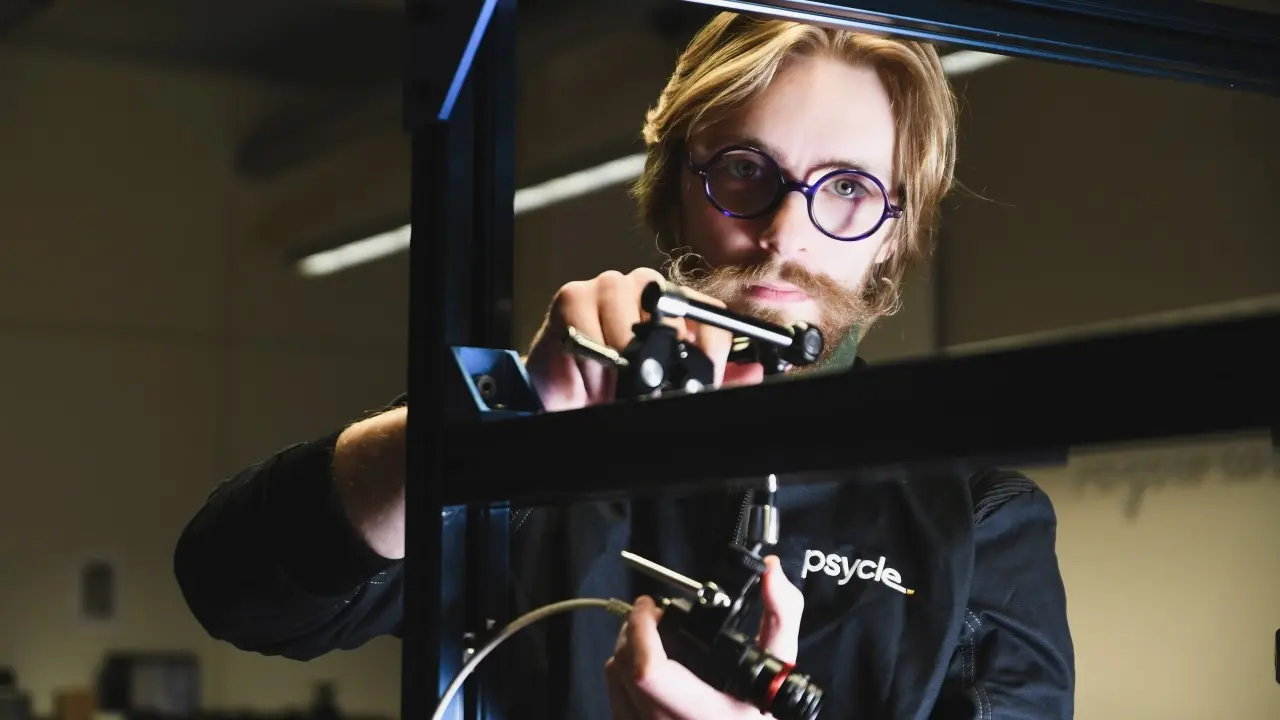
On an agri-food production line, green beans fall at high speed. They all look identical. However, some must be discarded according to specific size criteria. The challenge here is not only to see them, but to measure them in motion without slowing down production. It is in this type of situation that Psycle’s expertise in industrial vision comes into its own. And it is precisely these issues that Martin D., a vision and AI engineer who joined the company in November 2025 to strengthen its optical and algorithmic expertise, is working on.
With a PhD in optics specializing in photonics, Martin brings a deep understanding of light phenomena. His career, initially focused on fundamental research, now has direct applications in industry. At Psycle, based in Lacroix-Saint-Ouen, he works at the intersection of imaging systems, software development, and artificial intelligence.
An image that can be used above all else
Artificial intelligence cannot compensate for a poorly controlled image. It relies on an image that has been constructed with precision. In the case of our green beans, the work begins with an analysis of real constraints. These include scrolling speed, free fall, variable lighting, and conveyor integration. Martin then determines the appropriate sensor, calculates the field of view, anticipates the depth of field, and simulates the optical parameters in order to obtain an image that is reliable enough to be interpreted by the algorithm.
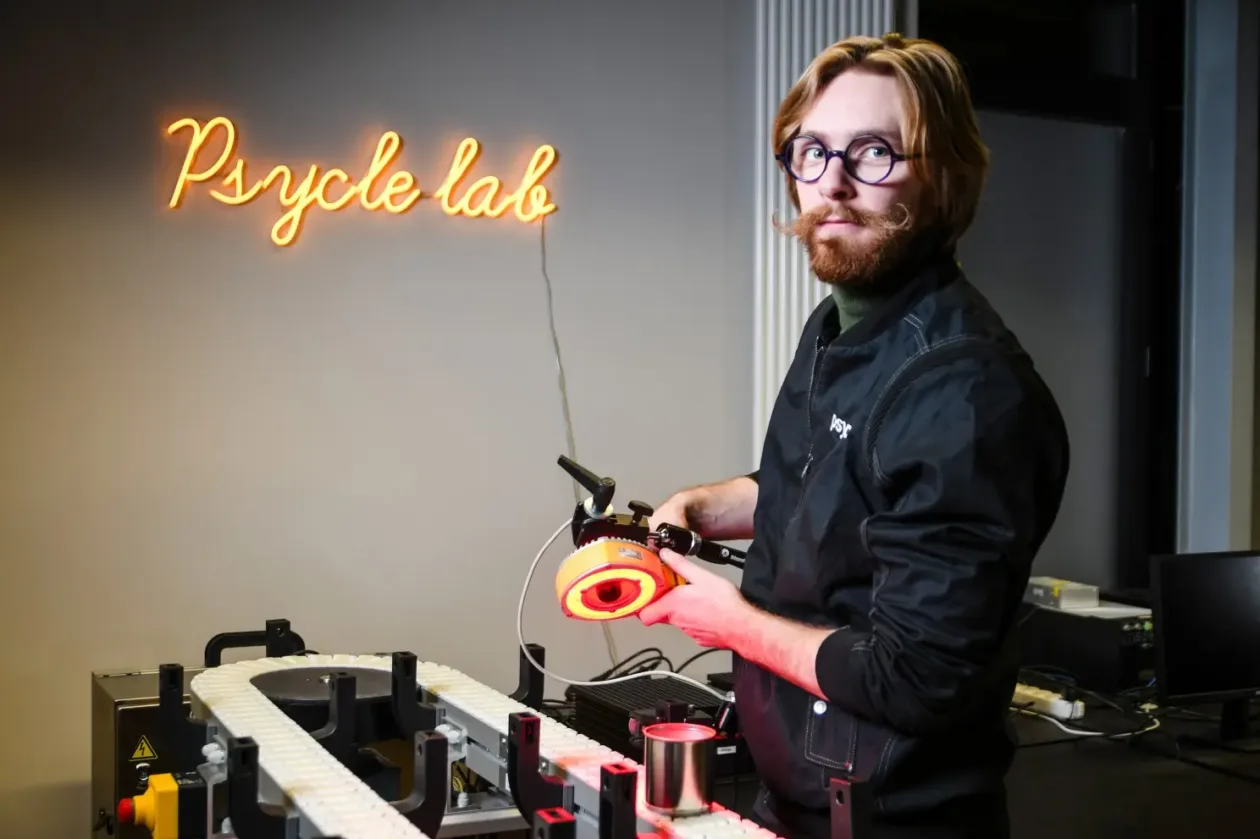
This methodical approach applies to all sectors. In the agri-food industry, the variability of living organisms complicates analysis. This is because one product resembles another without ever being strictly identical. Conversely, in the automotive industry, each part must conform to a theoretical model without excessive tolerance. In these two distinct cases, however, industrial vision requires fine tuning of the optical system and analysis software.
Fine adjustments to compensate for losses
On a cookie packaging line, bagging defects generate significant losses. This results in poorly cut bags, duplicate products, and/or trimmed packaging. This causes production delays, dry losses, and other inconveniences that require Psycle’s intervention. This is followed by the design of an end-of-line quality control device, incorporating a vision camera and custom software developed in-house. The algorithm has been finely calibrated to automatically detect non-conformities and thus ensure reliable production.
“Industrial vision does not eliminate jobs, it transforms them. Repetitive visual inspection gives way to the supervision of an intelligent system. Operators control the computer, analyze indicators, and intervene in the event of a deviation. The value therefore shifts to the analysis and understanding of the process.”

Detecting the invisible
More recently, Psycle has entered the world of premium spirits. The challenge posed by SAVERGLASS is to inspect decorated bottles with curved and reflective surfaces. A micro-scratch, printing defect, or decorative imperfection can compromise visual quality. Martin therefore analyzes samples in-house, tests different lighting configurations, and studies the possibility of using multiple cameras to cover the entire surface.
The difficulty here lies in the consistency of the imaging system. The image must be sufficiently accurate to allow the algorithm to identify defects invisible to the naked eye, while remaining integrable on an industrial line. This study phase draws on both Martin’s optical expertise and the skills of the software development and artificial intelligence team.
AI and technological evolution
The core of the Psycle product is based on software developed specifically for each customer. Artificial intelligence is trained on real data, optimized, and then stabilized to ensure repeatability and compliance with quality standards. Martin contributes to this skill development, particularly in the areas of optics and the interaction between images and algorithms. His role consists as much of producing a usable image as it does of understanding how the computer will interpret it.
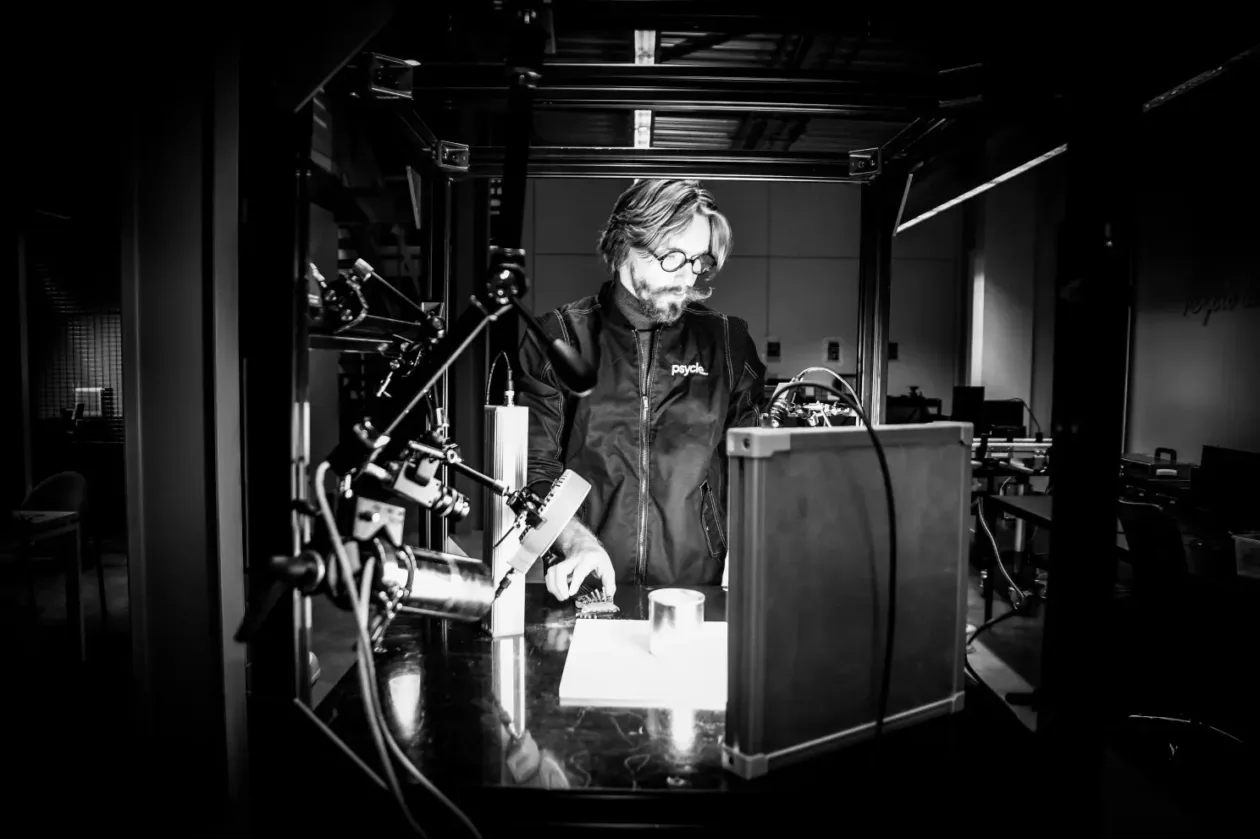
On-site integration is then the real test. Variable lighting conditions, unforeseen mechanical constraints, sustained industrial pace—each parameter must be validated in situ. Psycle provides regular monitoring after commissioning to ensure performance over time.
At the same time, Martin remains on the lookout and explores new technologies. He talks to us in particular about SWIR, based on short-wave infrared, which provides access to additional invisible information.
For Martin, these developments broaden the scope of industrial vision and open up new perspectives for material analysis. The sector still has many discoveries ahead of it, and Psycle has not finished evolving.