
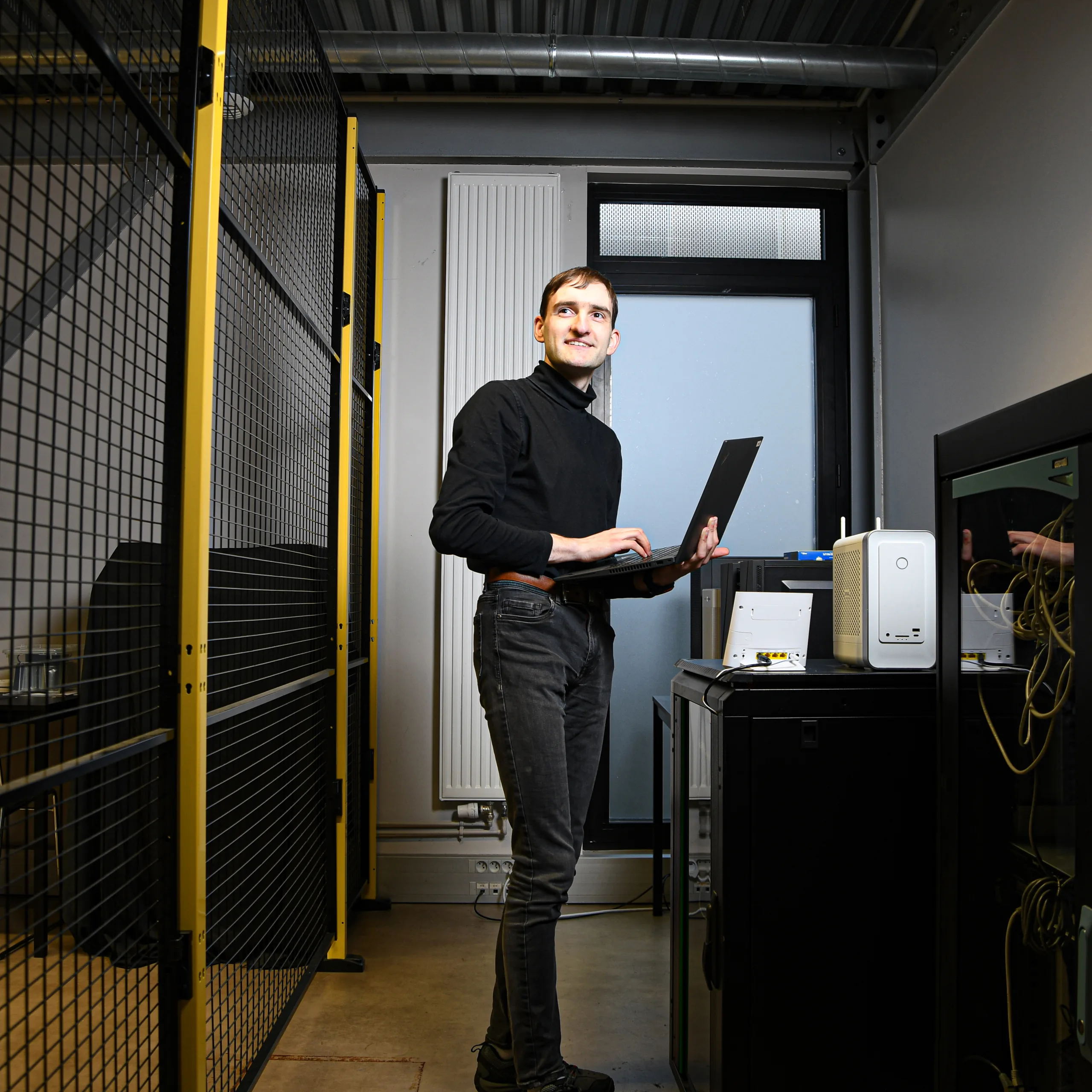
On a production line, everything moves fast. Very fast. The specifications received by Psycle indicate production rates that sometimes exceed 300 products per minute. At that pace, an error isn’t always visible to the naked eye, but it can be costly. Line stoppages, material waste, non-conformities, and even product recalls.
In this context, computer vision has emerged as a key tool. But there remains a gap between the technological promise and the reality on the ground. For an artificial intelligence model to work, everything around it must be reliable. This is precisely the area Gaëtan Blond, a data engineer at Psycle, is working on.
He joined the company nearly five years ago after completing an internship at UTC, and today plays a central role in the company’s technical infrastructure. His job is to turn what would otherwise remain theoretical into reality.
Architecture above all else
Before an algorithm can make a decision, the information it receives must be structured. On a production line equipped by Psycle, cameras continuously capture images. This data must be processed without latency or loss, then transformed into decisions: compliant or non-compliant, part accepted or rejected.
Between these steps, a complex technical process is set in motion. Gaëtan designs the tools that enable the collection of these data streams and, above all, make them usable.
In some cases, several thousand images are generated every minute. This work therefore requires precise resource management. It is necessary to arbitrate, prioritize, and organize data loading and unloading cycles to maintain system stability. Because AI does not correct a poorly structured system—it depends on it.
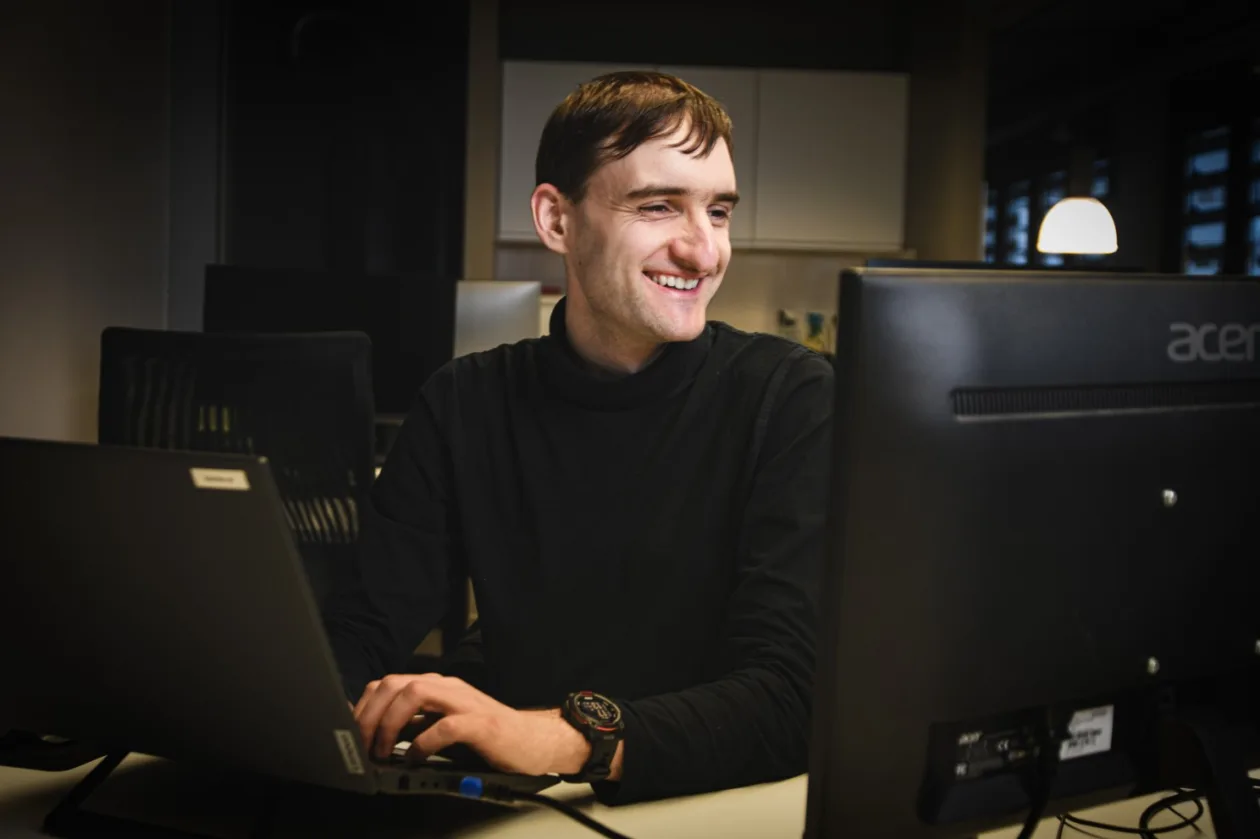
Making AI Work
Once in production, the AI model analyzes the images and generates a result. This result is then used to make an immediate decision on the production line.
“In the industry, there is no room for error at this stage. A false negative could allow a critical defect to slip through. A false positive could unnecessarily slow down production. It is therefore a constant balancing act.”
Gaëtan acts as a facilitator here. He does not directly develop the models, but rather creates the environment in which they operate. His work thus determines Psycle’s ability to adapt quickly without compromising the reliability of existing systems.
Retrain without disrupting production
A model is never static. Products evolve, defects change, and production conditions vary. It therefore becomes necessary to retrain the algorithms. This process improves performance without interrupting production.
Anticipation as the central focus
According to some estimates, one hour of production downtime can cost between €10,000 and €100,000, depending on the industry.
To prevent these situations, Psycle implements continuous monitoring of deployed machines. Each computer reports metrics in real time.
Gaëtan helped design this system. The data is centralized on secure servers, analyzed, and then converted into alerts when certain thresholds are exceeded. The team can then intervene remotely, often before the customer even notices a problem.
The reality on the ground
In the field, conditions are rarely ideal. Some installations take place in sensitive areas with strict access restrictions. Others involve legacy equipment that must be integrated without being replaced.
These situations require constant adaptability. They also serve as a reminder that technology is only as valuable as its ability to function in the real world. And the Psycle teams are well aware of this.
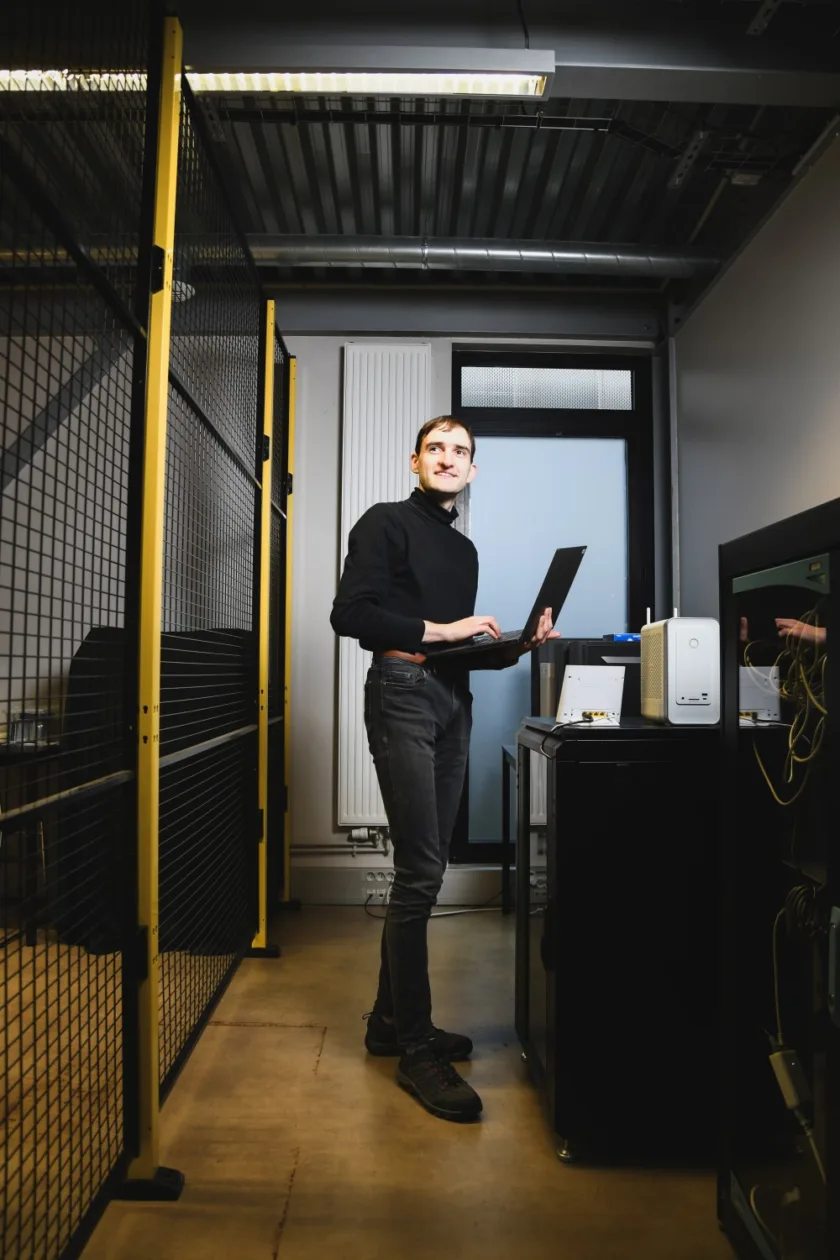
Safety and Industrial Standards
Some projects take place in environments subject to strict standards, such as ISO 27001. This requires rigorous security and information protection practices.
Gaëtan contributes to this aspect by implementing secure connections, data encryption, and traffic control.
Industrial AI is not limited to performance. It must also operate within a secure and controlled framework.
A focus on progress
Since joining Psycle, Gaëtan has witnessed the evolution of artificial intelligence capabilities. Hardware limitations have shifted, tools have improved, and possibilities have expanded.
Before integrating a new technology, tests are conducted to assess its suitability—including performance, cost, and ease of integration. This monitoring process helps guide technical decisions and propose viable solutions for manufacturers.
A passion that goes beyond the screen
Behind this career path lies a long-standing curiosity about computer science. Developed at a very early age, pursued as a self-taught hobby, and later deepened at the University of Technology of Compiègne (UTC), this passion is now complemented by his involvement with the France-ioi association, where Gaëtan helps mentor young people in learning algorithmic thinking.
Even today, he remains dedicated to sharing his knowledge, particularly with young audiences. Outside of his professional life, he also devotes time to the Compiègne Society for the Prevention of Cruelty to Animals (SPA). This necessary balance, away from screens, allows him to maintain a tangible connection with nature.
Artificial intelligence does not rely solely on algorithms. It relies on the men and women capable of making it reliable and useful.
And as we know, in the industry, it is often what goes unseen that makes all the difference.